
 By Femme Wire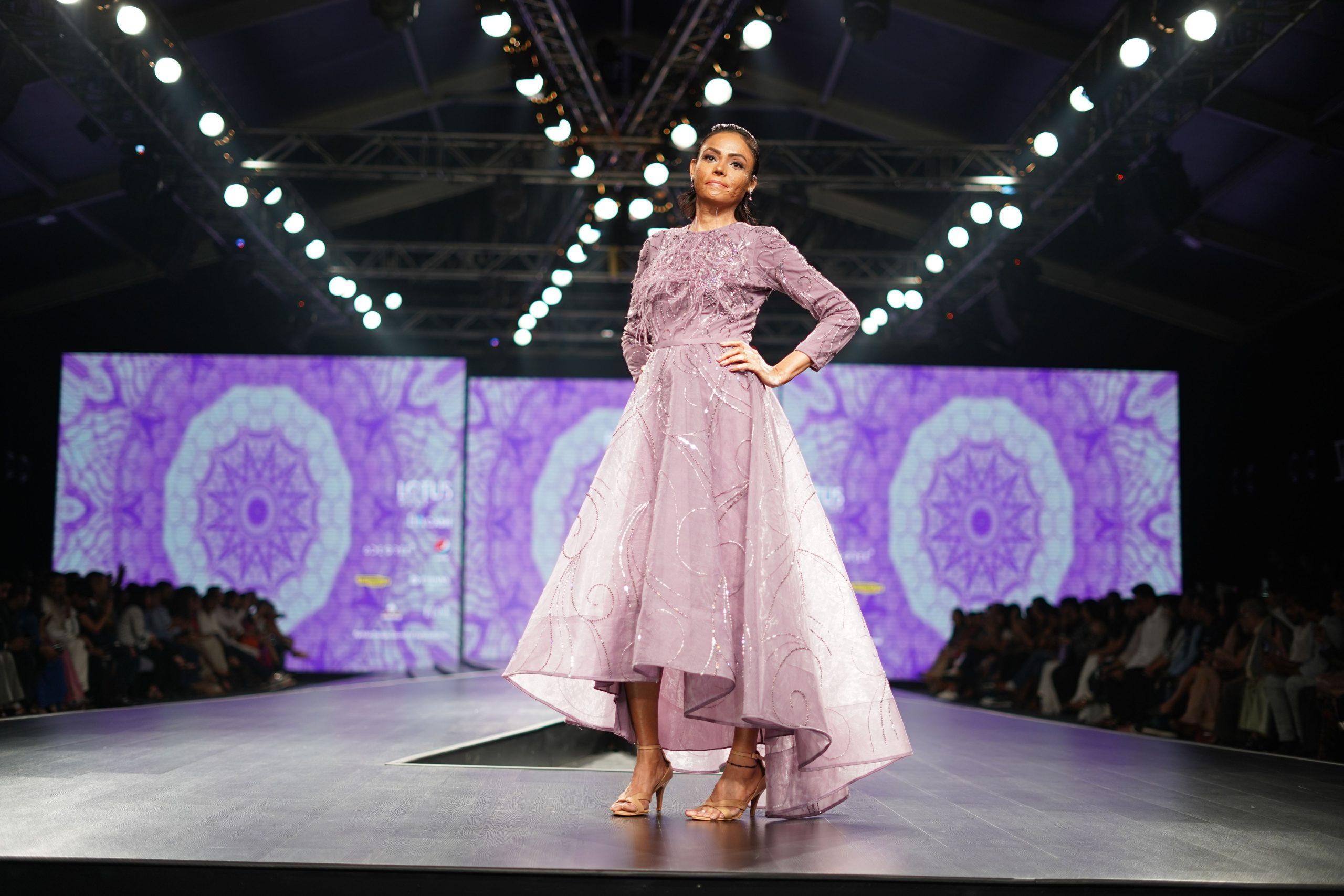
New York Fashion Week has never been only about what happens on the runway. The clothes may provide the official reason everyone gathers in Manhattan, but the women sitting in the front row, arriving at parties, crossing the street between shows and posing for photographers have become part of the spectacle themselves. During the Spring/Summer 2027 season, that relationship between fashion and entertainment became especially obvious. Celebrity dressing was not simply a supporting feature around Fashion Week. It was one of the events.
The front row has effectively become its own stage, complete with its own casting, styling and audience. Vogue’s running coverage of the Spring/Summer 2027 shows documented a steady stream of celebrities appearing at New York presentations, with Elle Fanning among the early headline-making arrivals and more stars joining the circuit throughout the week.
That matters because Fashion Week has evolved into something much larger than a sequence of runway shows. The event now operates as a giant cultural gathering where actors, musicians, models, athletes, influencers, designers and fashion insiders all overlap. A person does not have to walk in a collection to become part of the fashion story. Sometimes sitting in the right chair, wearing the right look and being photographed at exactly the right moment is enough.
And this season, there were plenty of women willing to make that chair their own.
One of the most noticeable examples was Zendaya, who made a surprise appearance at Prada Beauty’s SoHo fragrance pop-up during New York Fashion Week. She arrived with a newly debuted romantic pixie cut and a playful Prada look styled by Law Roach, turning what could have been a relatively straightforward brand appearance into one of the week’s beauty and celebrity-style talking points.
That is the modern celebrity-fashion formula in miniature. The haircut becomes a story. The outfit becomes a story. The brand appearance becomes a story. Photographs become social posts. Social posts become fashion coverage. Suddenly, one appearance has created several different pieces of entertainment.
Bella Hadid provided another version of the same phenomenon. After spending much of the previous two years focusing her fashion schedule on Paris and Milan, Hadid returned to New York during the September 2026 Fashion Week period. She did not even need a runway appearance to command attention. Instead, she appeared around Manhattan in a series of highly considered vintage-inspired looks, including a 1996 Valentino dress, vintage accessories and another outfit built around a gray sweater dress, white shirt and vintage Givenchy necklace.
Her return demonstrated just how powerful street style has become. A celebrity does not necessarily have to be walking down a runway for the fashion world to watch her. Walking into a hotel, arriving at a party or simply moving through Manhattan can become part of the week’s visual narrative.
The street has become another runway.
ELLE’s coverage of Spring/Summer 2027 street style made that especially clear, highlighting the people encountered between shows and describing the sidewalks as a source of fashion inspiration in their own right. Among the recognizable women appearing around the week were Diane von Furstenberg, Teyana Taylor, Solange Knowles, Kelly Rutherford and Olivia Palermo.
That mixture is important because it shows how broad the Fashion Week audience has become. There is the established designer. The musician. The actress. The social figure. The longtime New York fashion personality. The emerging creative. Each brings a different audience into the same conversation.
Diane von Furstenberg’s presence was particularly symbolic this season. She appeared at Henry Zankov’s debut show for her namesake brand, connecting the legacy of one of fashion’s most recognizable female designers with the next chapter of the house. Meanwhile, Teyana Taylor made a memorable appearance at Calvin Klein and caught up with Solange Knowles, whose music played during Veronica Leoni’s runway show.
It is moments like these that make Fashion Week feel less like a traditional industry event and more like a constantly moving cultural production.
The women attending are not simply there to look at clothes. They bring their own identities, careers and audiences with them. When an actress attends a show, fans who might not normally follow fashion become interested. When a musician appears in a designer’s front row, music audiences enter the fashion conversation. When an athlete attends an event, sports culture crosses into luxury and celebrity culture.
Fashion benefits from the crossover, and the celebrity benefits from the setting.
It is a relationship that has become increasingly sophisticated.
Consider the number of women appearing at the Net-a-Porter “Incredible Women” event during NYFW. The guest list included Serena Williams, Cindy Crawford, Katie Holmes and Emmy Rossum, alongside designers, editors, creators and other fashion figures. Serena Williams arrived in a regal purple Loewe look, while Crawford appeared in sleek black.
The event itself was an extension of Net-a-Porter’s existing “Incredible Women” content franchise, which made the gathering more than simply another Fashion Week party. It turned the idea of influential women into the theme of the night, with the guests becoming part of the visual storytelling.
That is another reason celebrity dressing has become entertainment.
People are not only interested in what a woman is wearing. They are interested in the entire context around the look. Where is she going? Who is she with? Which designer is she wearing? Who styled her? What does the outfit say about her current era? Is she promoting something? Is she returning to the fashion circuit? Is the look nostalgic? Is it unexpected?
The clothing becomes a character in a larger story.
And social media has made that story dramatically faster.
A celebrity can leave a show and have photographs circulating before she reaches the next event. A street-style photographer can capture an outfit that becomes widely shared within hours. Fans can compare several appearances from the same day. Fashion accounts can identify vintage pieces almost immediately. A hairstyle can become a trend before the week is over.
The runway may establish the clothes, but the women wearing them help determine which looks people actually remember.
That is why street style continues to matter so much. It offers an alternative to the polished fantasy of the runway. A designer can present an elaborate collection under perfect lighting, but the audience gets to see what the fashion looks like when it is being worn by real people moving through a real city.
And the most compelling women often make those looks feel like an extension of themselves rather than a costume.
That was evident in the street-style coverage from this season. ELLE’s editors identified a mixture of practical and expressive looks, including crisp white shirts with wide-leg denim, accessories that transformed simple outfits and more statement-driven ensembles. The message was not that everyone needs to dress dramatically. It was that personal styling can turn familiar pieces into something distinctive.
That idea also connects with the broader Spring/Summer 2027 mood coming out of New York.
Vogue’s coverage of the season has highlighted personality-driven touches, including statement brooches, royal purple, cummerbunds, silk scarves and standout pieces from designers such as Conner Ives. The emphasis is increasingly on styling and individuality rather than simply wearing a recognizable label.
Women are therefore becoming part of the creative process in a more visible way.
A designer creates the garment. A stylist builds the look. A celebrity interprets it. A photographer captures it. Social media distributes it. Fans react to it. Suddenly, the original runway piece has become part of a much larger cultural conversation.
That is why the front row matters.
It is not just about proximity to the runway anymore. It is about visibility.
A front-row appearance can introduce a celebrity to a new fashion audience. It can strengthen a designer’s association with a particular kind of woman. It can generate thousands of photographs and social posts. It can create a moment that lives independently of the collection itself.
Even the fashion industry’s increasingly elaborate parties contribute to this phenomenon. Vogue’s coverage of the Spring/Summer 2027 season noted that Manhattan was filled with parties and celebrity-heavy events surrounding the shows, extending the Fashion Week experience beyond the official runway schedule.
In other words, Fashion Week does not end when the models leave the runway.
The women leave the venue and become the next part of the show.
They head to dinner. They attend a party. They change outfits. They pose outside a restaurant. They appear in another designer’s front row. They are photographed on the street. They post an image. Another publication writes about the image. Fans discuss it. And suddenly the fashion week schedule has turned into an entertainment schedule.
This is particularly significant for female celebrity culture because women have historically been scrutinized intensely for what they wear. But there is an important difference between simply being judged on appearance and actively using fashion as part of a public identity.
The women appearing during Fashion Week are increasingly participating in that storytelling themselves.
They can choose archival fashion. They can embrace emerging designers. They can work with a stylist to create a recognizable visual identity. They can wear something deliberately unexpected. They can use a brand appearance to introduce a new beauty look. They can make a street-style photograph feel as significant as a magazine cover.
The clothes become communication.
Bella Hadid’s vintage-heavy New York return, Zendaya’s new pixie cut and Prada appearance, Serena Williams’s dramatic purple Loewe look and Cindy Crawford’s sleek Fashion Week presence all demonstrate different versions of that idea. None of these women needed to walk a runway to become part of the fashion conversation.
And that may be the biggest evolution in Fashion Week.
The runway is no longer the only stage.
The front row is a stage. The sidewalk is a stage. The restaurant entrance is a stage. The after-party is a stage. The Instagram post is a stage.
The women moving through all of these spaces are helping blur the line between fashion coverage and entertainment coverage. Their outfits are news. Their appearances are news. Their friendships and collaborations can become news. Even their absence can become news when people notice that a familiar Fashion Week face has disappeared.
Fashion Month thrives on this constant movement.
New York has now handed the conversation to London, followed by Milan and Paris, but the women who appeared in Manhattan have already helped establish one of the season’s biggest themes: personality matters. The most memorable fashion moments are not necessarily the most expensive outfits or the biggest celebrity names. They are the ones where the woman wearing the clothes appears completely in control of the image she is creating.
That is why celebrity dressing has become its own form of entertainment.
The runway gives us the clothes.
The women give us the moment.
And Fashion Week gives everyone a front-row seat.
- Vogue — Every Celebrity on the Front Row at New York Fashion Week Spring 2027
- Vogue — Bella Hadid Packed Her Best Vintage for a New York Fashion Week Return
- ELLE — The Best Street Style From New York Fashion Week Spring/Summer 2027
- ELLE — Zendaya Solidifies 3 Fall Trends With Her Pixie Cut and Prada Look
- Vogue — Net-A-Porter Hosted an Incredible Women Party During NYFW
- Vogue — Everyone Wore These 4 Things at New York Fashion Week
- Vogue — Inside the Chicest Parties of New York Fashion Week
Source: FemmeWire.com — The Women Who Turned Fashion Week Into Their Own Stage
 Sara Jasmine