
 By Sara Jasmine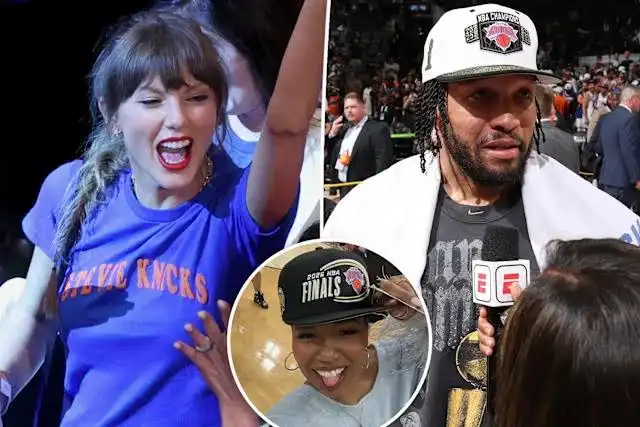
Jalen Brunson defends a Knicks analyst after a Taylor Swift hot-mic controversy sparks debate online. Here’s what happened, why fans reacted, and what it means for sports and celebrity culture.
In today’s social media-driven world, a single comment can become a national conversation within minutes. That reality became clear once again when a hot-mic moment involving a New York Knicks analyst and global pop superstar Taylor Swift sparked widespread discussion online. What might have been a brief off-air remark quickly transformed into a trending topic, drawing reactions from sports fans, entertainment followers, and media personalities alike.
The controversy gained even more attention when New York Knicks star Jalen Brunson publicly defended the analyst at the center of the discussion. His comments helped shift the conversation away from outrage and toward a broader debate about media scrutiny, celebrity culture, and the impact of viral moments.
So what exactly happened, why did it become such a major story, and why did Brunson decide to speak out? Here’s a closer look at the controversy and the reactions that followed.
Hot-mic incidents have become increasingly common in modern media. With cameras and microphones constantly rolling, broadcasters and analysts often find themselves unintentionally sharing private thoughts with a public audience.
In this particular case, a Knicks analyst was reportedly caught making comments about Taylor Swift during what was believed to be an off-air moment. Once the clip surfaced online, it spread rapidly across social media platforms, generating thousands of reactions within hours.
Fans immediately began dissecting every word of the exchange. Some viewed the comments as harmless and casual, while others interpreted them as unnecessarily critical of one of the world’s most recognizable entertainers.
As often happens in today’s digital landscape, context quickly became a point of contention. Supporters argued that the remarks were never intended for public consumption and should not be judged as formal commentary. Critics, however, believed public figures should remain accountable regardless of whether microphones are officially live.
The divide helped fuel online discussions throughout the sports and entertainment communities.
One reason the incident attracted so much attention is simple: Taylor Swift remains one of the most influential celebrities in the world.
Whether releasing chart-topping albums, selling out stadium tours, or appearing at high-profile sporting events, Swift consistently generates headlines. Her presence often extends beyond music and into broader cultural conversations.
Over the past several years, Swift’s visibility within sports has increased dramatically. Media coverage of her appearances at major sporting events has frequently become a story of its own, attracting both enthusiastic support and criticism from fans who believe sports broadcasts should remain focused on the game.
As a result, even minor comments involving Swift tend to receive outsized attention. Her enormous fan base ensures that discussions surrounding her public image quickly gain momentum online.
For media personalities, mentioning Swift often means entering one of the most closely watched conversations in popular culture.
Without social media, the hot-mic incident likely would have disappeared almost immediately. Instead, platforms such as X, Instagram, TikTok, Facebook, and YouTube transformed the moment into a viral story.
Short clips circulated rapidly, often without full context. Users shared opinions, created reaction videos, and debated whether the analyst’s comments crossed a line.
This pattern has become increasingly common in modern media. A brief remark can be clipped into a few seconds of content, reposted thousands of times, and viewed by millions of people before additional context emerges.
The speed of digital communication often encourages emotional reactions before complete information becomes available. By the time clarifications are offered, public opinion may have already formed.
The Taylor Swift controversy serves as another example of how quickly online narratives can develop and spread.
As the debate continued to gain traction, Jalen Brunson addressed the situation and offered support for the analyst involved.
Rather than joining the criticism, Brunson reportedly suggested that the reaction may have been disproportionate to the incident itself. His comments emphasized the importance of understanding context and recognizing that people occasionally say things casually when they believe they are speaking privately.
Brunson’s defense resonated with many fans who felt the controversy had grown larger than the original comment warranted.
The Knicks star’s response reflected a perspective shared by many athletes who regularly interact with media members. Players and analysts often work closely together throughout a season, building professional relationships that involve both formal interviews and informal conversations.
Because of that dynamic, Brunson appeared to view the incident through a more human lens, focusing on intent rather than simply reacting to a viral clip.
His willingness to defend the analyst added another layer to the discussion and helped shift attention toward broader issues involving privacy and media accountability.
Jalen Brunson has established himself as one of the NBA’s most respected leaders. Known for his professionalism and calm demeanor, he rarely seeks controversy.
That reputation made his comments particularly noteworthy.
When athletes speak publicly on sensitive issues, their words often carry significant weight. Fans recognize that players possess firsthand experience navigating intense media scrutiny and public criticism.
Brunson’s defense suggested that not every viral moment deserves widespread outrage. Instead, he encouraged a more measured approach that considers circumstances, intent, and context before reaching conclusions.
Many observers viewed his response as a reminder that public discourse can benefit from patience and perspective.
His comments also highlighted the growing challenge faced by public figures operating in an era where nearly every interaction can be recorded, shared, and analyzed.
The controversy also reignited ongoing debates about celebrity coverage in sports media.
Some sports fans have argued that celebrity appearances receive excessive attention during broadcasts. Others enjoy seeing well-known personalities participate in major sporting events and believe such coverage helps attract new audiences.
Taylor Swift frequently finds herself at the center of this discussion due to her immense popularity.
Supporters argue that her appearances naturally generate interest and deserve coverage. Critics contend that broadcasters sometimes focus too heavily on celebrity spectators rather than the athletes competing on the court or field.
The hot-mic controversy indirectly touched on these frustrations, contributing to the strong reactions seen online.
As sports and entertainment continue to intersect, similar debates are likely to remain part of the broader conversation.
For analysts, broadcasters, and commentators, the incident serves as a reminder of the unique challenges associated with modern media.
Unlike previous generations, today’s media professionals operate in an environment where every microphone, camera, and smartphone has the potential to capture content that reaches a global audience.
Even comments intended as jokes, private observations, or casual conversations can become headline news.
This reality creates pressure for media members to remain cautious at all times. While professionalism remains essential, many observers argue that expecting perfection from every individual in every moment is unrealistic.
The Knicks analyst’s experience highlights how quickly an unintended remark can evolve into a major public controversy.
Public reaction to the incident has remained mixed.
One group believes the analyst’s comments were inappropriate and deserved criticism. These individuals argue that public figures should be mindful of their words regardless of whether they believe they are speaking privately.
Another group believes the backlash was excessive and that the comments were relatively minor compared to the reaction they generated.
A third group focused less on the specific remarks and more on broader concerns involving privacy, media ethics, and viral culture.
This division reflects the increasingly complex nature of public discourse in the digital age. Different audiences often interpret the same event through entirely different lenses.
As a result, consensus can be difficult to achieve.
The incident may ultimately serve as a learning experience for everyone involved.
For broadcasters and analysts, it reinforces the importance of recognizing that microphones can capture conversations at any time.
For fans, it highlights the value of seeking context before forming judgments based on short clips circulating online.
For athletes, it demonstrates how influential their voices can be when discussions move beyond sports and into broader cultural territory.
Most importantly, the controversy underscores the changing nature of media consumption. Viral moments increasingly shape public conversations, often blurring the lines between sports, entertainment, and social commentary.
At its core, the Jalen Brunson and Taylor Swift controversy is less about a single comment and more about how modern audiences consume information.
A brief hot-mic moment became a national discussion because it involved recognizable personalities, social media amplification, and larger cultural debates about celebrity influence and media responsibility.
Brunson’s decision to defend the analyst offered an alternative perspective at a time when online discourse often gravitates toward immediate judgment.
Whether fans agree with his stance or not, his comments encouraged a broader conversation about fairness, context, and the consequences of viral outrage.
The hot-mic controversy involving a Knicks analyst and Taylor Swift quickly evolved into one of the most discussed sports-entertainment stories online. As reactions poured in from fans and commentators, Jalen Brunson emerged as a notable voice of support for the analyst, urging people to consider the full context surrounding the incident.
The episode highlights the powerful intersection of celebrity culture, sports media, and social media. It also serves as a reminder that in today’s digital landscape, even the smallest moments can become major headlines.
While debates surrounding the controversy will likely continue, Brunson’s response offered a perspective focused on understanding rather than outrage. In an era defined by instant reactions and viral content, that message may be more relevant than ever.
 Femme Wire