
 By Sara Jasmine
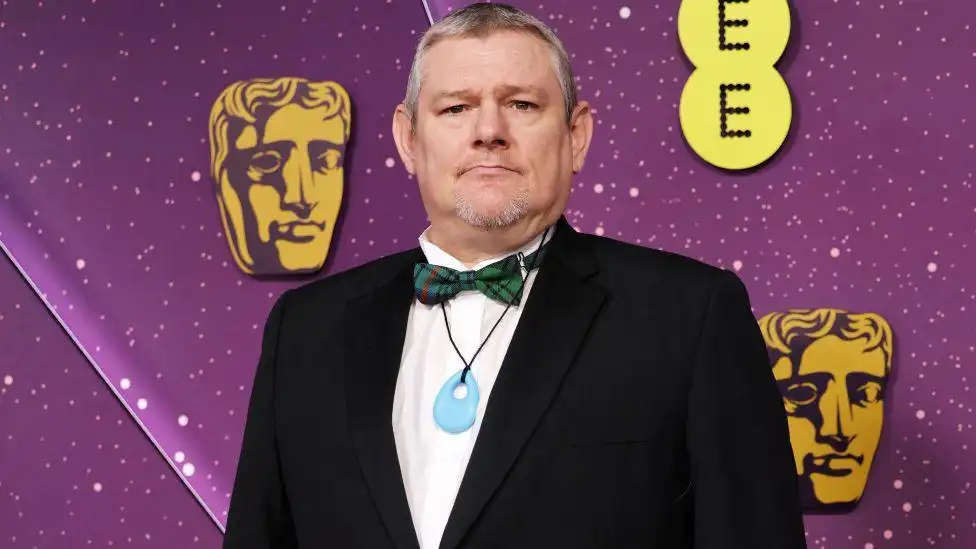
In an era where pop culture, social accountability, and comedy collide in real time, satire has become both a mirror and a magnifying glass. When controversy erupts, audiences no longer wait weeks for commentary—late-night television delivers it within days. Recently, Saturday Night Live (SNL) once again stepped into the cultural crossfire, skewering an awards-season controversy linked to the BAFTA Awards and the broader phenomenon of canceled A-listers.
What followed wasn’t just another comedy sketch—it was a pointed reflection of how modern fame, accountability, and public outrage now function in the digital age.
For decades, SNL has thrived by turning uncomfortable truths into digestible comedy. From political scandals to celebrity meltdowns, the show’s longevity rests on its ability to say what many are already thinking—just louder, sharper, and funnier.
This time, the target wasn’t a single person but an entire system:
- Awards shows struggling to modernize
- Celebrities caught between apology tours and silence
- Audiences divided between empathy and outrage
The BAFTAs-related incident referenced in the sketch—widely discussed online for its mishandling of sensitive language and public response—became a jumping-off point for a larger critique: How do institutions respond when intent, impact, and accountability clash?
Awards ceremonies have always positioned themselves as celebrations of excellence. But in recent years, they’ve also become flashpoints for cultural tension.
The BAFTAs incident that inspired SNL’s satire was not just about a single moment—it was about process failure:
- Delayed clarification
- Awkward public messaging
- Confusion between explanation and excuse
Online discourse quickly escalated, blending genuine advocacy with viral outrage. Some voices called for education and nuance. Others demanded immediate cancellation. The result? A familiar cycle: trending hashtags, fractured opinions, and reputational damage that outlived the original moment.
SNL’s genius lies in compressing this chaos into a few minutes of comedy—highlighting how everyone talks at once, but no one listens.
One of the most delicate aspects of the controversy was how neurological and mental health conditions were discussed online. SNL’s sketch avoided naming individuals, instead exposing how social media often oversimplifies complex medical realities.
The broader takeaway wasn’t mockery—it was critique:
- Of performative outrage
- Of armchair diagnoses
- Of platforms rewarding speed over accuracy
In today’s media landscape, context is often the first casualty.
Beyond the BAFTAs reference, SNL widened its scope to include a familiar modern archetype: the “temporarily canceled celebrity.”
These are stars who:
- Issue apology notes written in Notes app fonts
- Disappear “to reflect”
- Quietly return months later via prestige projects or rebrands
SNL portrayed this cycle with brutal accuracy, poking fun at how cancellation has evolved from consequence to career phase.
In the past, scandals ended careers. Today, they often just pause them.
One of the sketch’s most resonant themes was the confusion between accountability and erasure.
Audiences are increasingly asking:
- Is cancellation about justice or visibility?
- Who decides when an apology is enough?
- Why do some celebrities recover while others vanish permanently?
SNL didn’t offer answers—it offered a mirror.
By exaggerating the mechanics of outrage culture, the show highlighted an uncomfortable truth: public forgiveness is inconsistent, selective, and often influenced by power, popularity, and profitability.
Institutions like BAFTA, the Oscars, and the Golden Globes now operate under constant scrutiny. Every word is dissected, every pause analyzed, every statement screenshotted.
This pressure has led to:
- Over-scripted presentations
- Excessive disclaimers
- Corporate-style apologies that feel emotionally hollow
SNL’s satire suggested that awards shows are no longer just celebrating art—they’re performing damage control live on stage.
With short-form content dominating attention spans, some question whether legacy shows like SNL still hold cultural power.
Moments like this prove they do.
Unlike viral clips designed to provoke instant reactions, SNL provides contextual satire—comedy that connects dots rather than isolates moments. It doesn’t just mock the controversy; it examines the ecosystem that creates it.
And in doing so, it sparks conversation beyond the punchline.
As expected, reactions were mixed:
- Some praised SNL for addressing a sensitive issue without naming or shaming
- Others felt satire wasn’t the appropriate vehicle
- Many shared clips precisely because they felt “uncomfortably accurate”
But that discomfort is the point.
Satire isn’t meant to soothe—it’s meant to provoke reflection.
The sketch ultimately underscored a shift in how fame functions:
- Celebrities are brands first, people second
- Institutions prioritize optics over substance
- Audiences hold immense power—but wield it unevenly
SNL didn’t claim moral authority. Instead, it showed how everyone—media, celebrities, fans—participates in the cycle.
In times of heightened sensitivity, comedy often becomes controversial by default. But history shows that satire thrives precisely when society is tense.
By addressing the BAFTAs incident and canceled A-listers in one narrative, SNL reaffirmed its role not just as an entertainment show, but as a cultural translator—turning outrage into observation, and chaos into commentary.
Whether viewers laughed, cringed, or disagreed, the sketch achieved its purpose: it made people talk—not just about the incident, but about how we respond to incidents.
In a world where reputations can collapse in a single headline and recover just as quietly, SNL’s satire reminds us that the real issue isn’t just what was said—but how quickly judgment replaces understanding.
And sometimes, the sharpest truth comes wrapped in a joke.
 Femme Wire