
 By Sara Jasmine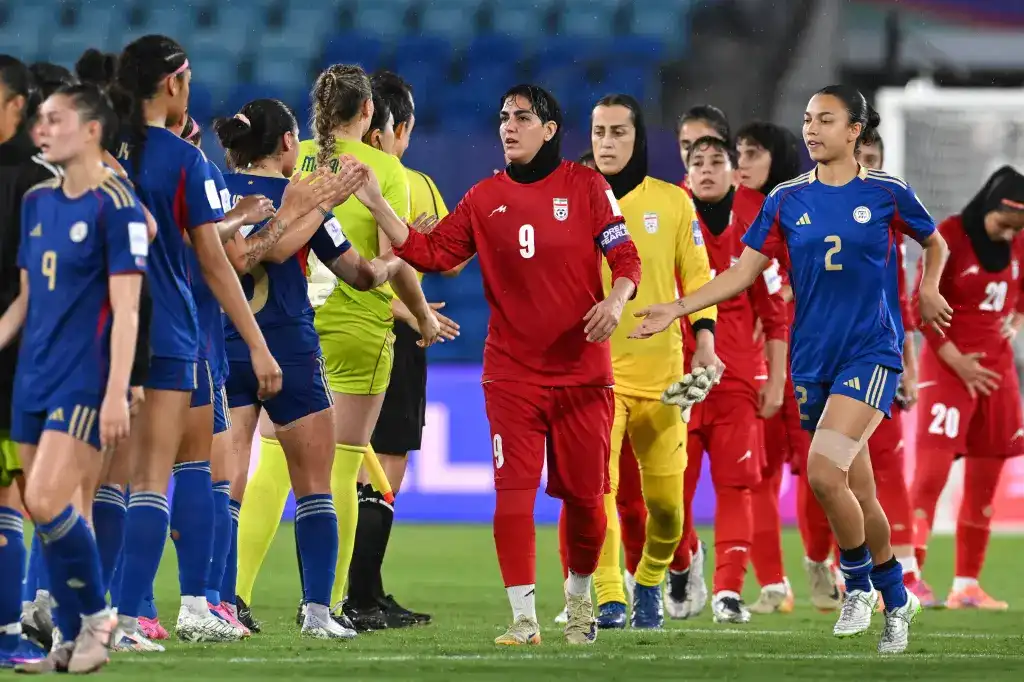
The international sports community was recently shaken by a dramatic development involving Zahra Ghanbari, captain of the Iran women’s national football team, who withdrew her asylum request in Australia after alarming reports that members of her family had gone missing in Iran.
Ghanbari initially sought asylum alongside several teammates during an international competition, citing fears of retaliation after the players reportedly protested during a tournament. However, her decision to reverse course highlights the immense personal pressure athletes can face when political conflicts intersect with global sports.
The story has drawn worldwide attention not only because it involves elite athletes but also because it reveals the complex realities faced by individuals who challenge political systems. For many observers, the situation underscores the difficult choices athletes must make when their personal safety, careers, and families are all at stake.
This article explores the events surrounding Zahra Ghanbari’s asylum bid, the broader context of Iranian women’s football, and the geopolitical tensions that turned a sports competition into an international controversy.
Before the asylum controversy, Zahra Ghanbari had built a strong reputation as a leader in Iranian women’s football. As captain of the national team, she represented the growing visibility of female athletes in Iran, where women’s sports have historically faced significant social and political barriers.
The Iran women’s national football team has worked for years to establish itself internationally despite challenges such as limited funding, strict dress codes, and cultural scrutiny. Female players in Iran often navigate complex expectations, balancing athletic ambition with societal pressures.
For many young girls in Iran, athletes like Ghanbari serve as role models who demonstrate that success in sports is possible even under restrictive conditions. The team’s participation in international tournaments has symbolized progress for women’s sports in the region.
However, that progress can also place athletes under intense political scrutiny.
The controversy reportedly began during an international tournament when some members of the Iranian women’s team refused to sing the national anthem before a match. Observers interpreted the gesture as a silent protest against political conditions in Iran.
In countries where public dissent is tightly controlled, even symbolic acts like refusing to sing an anthem can be seen as political defiance. Soon after the incident, the players faced criticism in Iranian media, with some commentators accusing them of disloyalty.
Concerns grew quickly among human rights advocates that the athletes might face disciplinary actions or legal consequences if they returned to Iran.
As the situation escalated, several players—including Ghanbari—began considering seeking asylum while abroad.
During the tournament, multiple Iranian players requested humanitarian protection in Australia. Authorities reportedly granted temporary visas and ensured the players’ safety while their asylum claims were reviewed.
The athletes were placed in secure accommodations and received legal assistance. Refugee advocates praised Australia’s willingness to offer protection to individuals who might face persecution in their home country.
For the players, however, the decision to seek asylum carried enormous personal consequences. Accepting asylum often means permanently leaving one’s homeland, family, and career.
The situation became even more complicated when reports emerged suggesting that the players’ families in Iran were experiencing pressure or intimidation.
According to multiple reports, Zahra Ghanbari became increasingly worried after losing contact with relatives in Iran. Some reports suggested that family members could not be located or had been detained.
Such developments placed the athlete in an impossible position: remain in Australia and risk harm to loved ones, or return home despite potential personal consequences.
Ultimately, Ghanbari decided to withdraw her asylum claim.
Her decision shocked many supporters who believed she would remain abroad. However, the move highlighted the powerful emotional and cultural bonds that often influence asylum decisions.
Family loyalty can be an overwhelming factor, especially in societies where relatives may face repercussions for the actions of family members overseas.
Ghanbari was not the only player to reconsider her decision.
Initially, several members of the Iranian delegation sought asylum in Australia. However, in the days that followed, multiple players withdrew their applications and chose to return home.
Observers noted that the shift happened rapidly, raising concerns among human rights advocates that external pressure might be influencing the athletes’ decisions.
Supporters within the Iranian diaspora community expressed fear that the players could face retaliation upon their return.
Meanwhile, Iranian media framed the players’ decision to return as a patriotic act, praising them for coming back to represent their country.
The case of Zahra Ghanbari highlights a broader historical pattern: international sports often intersect with politics.
Athletes have long used sporting events as platforms for protest. From Olympic boycotts to symbolic demonstrations on the podium, sports arenas frequently become stages for political expression.
However, athletes from countries with strict political controls may face far greater risks when expressing dissent.
For Iranian female athletes, those risks can be even greater due to existing social and cultural constraints surrounding women’s participation in sports.
As a result, even small gestures—such as refusing to sing a national anthem—can carry significant consequences.
Beyond the headlines, the story of Zahra Ghanbari is ultimately about personal sacrifice.
Athletes who consider asylum face life-altering decisions. Staying abroad may mean safety and freedom but also permanent separation from family and homeland. Returning home may bring emotional relief but also uncertainty and potential risk.
These dilemmas are not unique to Iranian athletes. Throughout history, competitors from politically restrictive countries have faced similar choices.
For many, the decision comes down to one fundamental question: protecting oneself or protecting one’s family.
The future for Zahra Ghanbari and her teammates remains uncertain.
Human rights groups are closely monitoring the situation to ensure that the athletes are not punished for their actions during the tournament.
Meanwhile, the international sports community is discussing how to better protect athletes who may face political pressure or retaliation.
Organizations involved in global football governance may also examine policies that protect players’ rights and safety during international competitions.
The situation serves as a reminder that athletes are not just competitors—they are individuals whose lives can be deeply affected by the political environments in which they live.
The story of Zahra Ghanbari’s withdrawn asylum bid is a powerful example of how sports, politics, and personal identity can collide.
What began as a symbolic protest during a football tournament quickly escalated into an international controversy involving asylum, diplomacy, and human rights.
For Ghanbari and her teammates, the choices they faced were incredibly difficult. Their decisions were shaped not only by personal safety but also by the well-being of their families.
As the global community continues to follow this story, it raises important questions about athlete protection, freedom of expression, and the responsibilities of host countries during international sporting events.
Ultimately, the case reminds us that behind every headline is a human story—one defined by courage, sacrifice, and the complex realities of life in a politically divided world.
You can copy these links directly:
- https://nypost.com/2026/03/15/world-news/captain-of-iranian-womens-soccer-team-withdraws-asylum-bid/
- https://www.theguardian.com/australia-news/2026/mar/16/fifth-iranian-football-player-leaves-australia-after-initially-accepting-offer-of-asylum
- https://apnews.com/article/bfa42b14841ed4e27490e2664c2d5e69
- https://timesofindia.indiatimes.com/sports/international-sports/iran-captain-zahra-ghanbari-leaves-australia-after-asylum-bid-as-iranian-womens-football-team-fears-family-members-missing/articleshow/129598006.cms
- https://www.thenationalnews.com/sport/football/2026/03/10/australia-says-iranian-women-players-granted-asylum-safe-here-as-concerns-grow-for-rest-of-squad/
- https://www.al-monitor.com/originals/2026/03/iranian-women-soccer-players-hotel-escape-aided-australian-police