
 By Femme Wire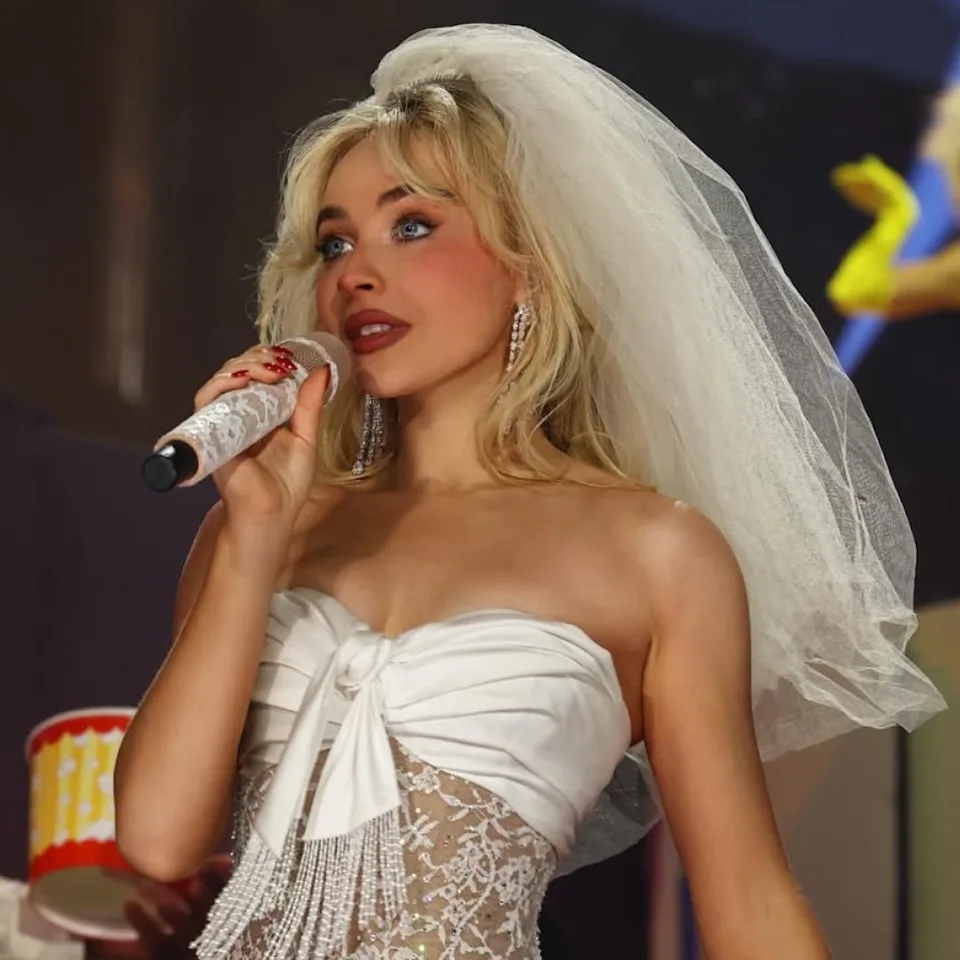
When Sabrina Carpenter stepped onto the stage at the Coachella Valley Music and Arts Festival, the conversation didn’t center on setlist surprises or guest appearances alone—it centered on execution. Her performance marked a clear statement in modern pop staging: production and storytelling now matter more than minimalism when it comes to commanding attention at scale.
In recent years, live music has often leaned toward stripped-back aesthetics—simple lighting, understated staging, and a focus on raw performance. But Sabrina’s approach moved in the opposite direction. Her set embraced cinematic production design, structured visual transitions, and narrative pacing that gave the performance a clear beginning, build, and resolution. It wasn’t just a concert; it was a staged experience designed to be watched, remembered, and repeatedly shared.
What made it resonate so strongly was how deliberately each visual element supported the emotional arc of the performance. Lighting shifts weren’t decorative—they marked transitions. Set pieces weren’t static—they evolved with the music. Camera framing for broadcast and social clips was clearly considered as part of the design, ensuring that even viewers who weren’t physically present could experience the scale and intention of the show.
This level of production changes how audiences engage with live music. Instead of isolating standout songs or moments, viewers process the entire set as a continuous narrative. That structure encourages deeper attention and stronger recall, which translates directly into online conversation. Clips circulate not just because of a single viral moment, but because the performance as a whole feels cohesive and intentional.
It also reflects a broader shift in what audiences expect from headline performances. In a saturated attention economy, minimalism alone is no longer enough to stand out at major cultural events. Audiences are exposed to countless performances across platforms daily, and the ones that dominate conversation tend to be those that offer layered visual and emotional experiences. Sabrina’s set tapped directly into that expectation.
Importantly, this approach doesn’t replace musicality—it amplifies it. The production design acts as a framework that elevates the songs rather than distracting from them. Each track becomes part of a larger narrative sequence, allowing emotional tone and visual storytelling to reinforce each other. That synergy is what drives memorability and replay value long after the performance ends.
The response online reflected this shift. Instead of focusing on isolated clips, audiences discussed the set as a whole experience—its pacing, its visual identity, and its cinematic feel. The performance didn’t just generate moments; it generated structure, and that structure became the conversation.
Ultimately, Sabrina Carpenter’s Coachella night one performance signals a clear evolution in live pop culture. In 2026, it’s no longer just about being on stage—it’s about building a world on stage. And in that world, production and storytelling don’t support the performance. They are the performance.
 Sara Jasmine