
 By Femme Wire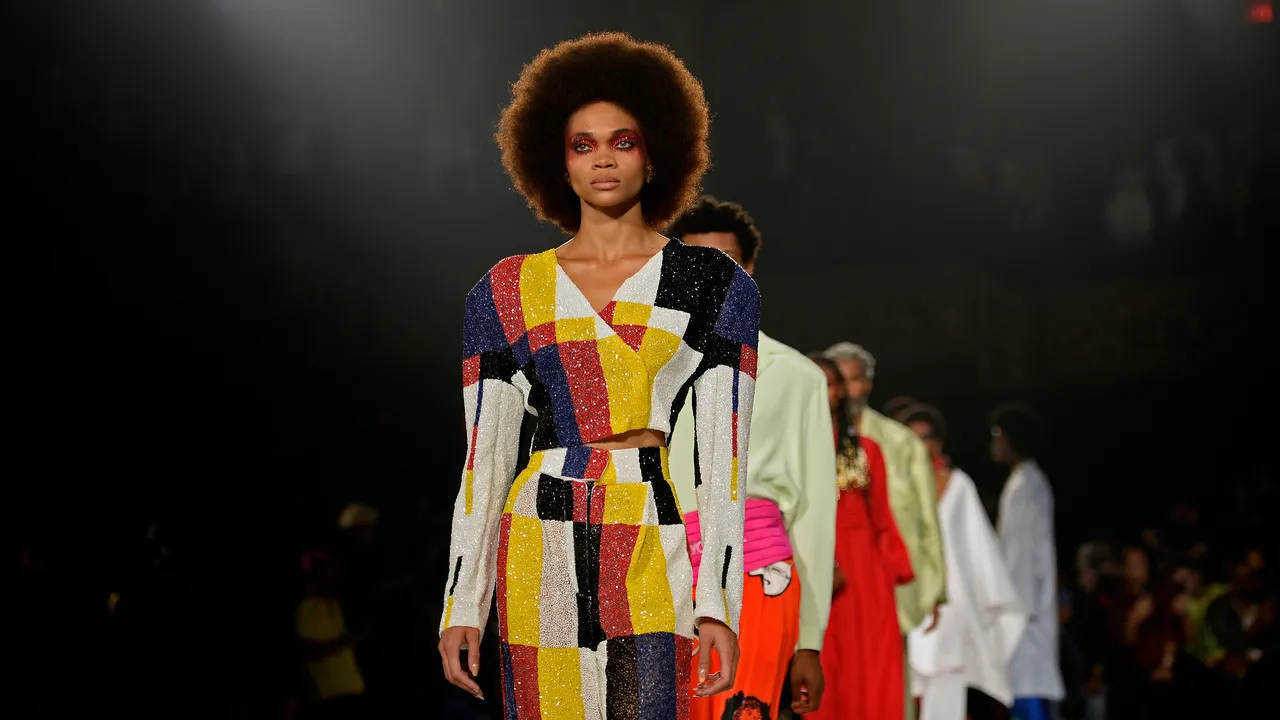
New York Fashion Week has always been about the clothes, but anyone watching the streets, front rows and arrivals this September knows that the runway is only part of the spectacle. The Spring/Summer 2027 season has transformed New York into a moving fashion stage, where designers unveil their newest collections while actresses, athletes, singers, models and style personalities create their own moments everywhere around them. The official NYFW schedule runs through September 15, with roughly 70 runway shows and designer presentations, giving the city nearly a week of fashion activity to absorb.
And then there are the women making sure you notice.
Simone Biles, Hailee Steinfeld, Minka Kelly and a long list of other recognizable faces have become part of the NYFW story, proving once again that the modern front row is not simply a place to sit and watch a collection. It has become another form of celebrity stage. One appearance can generate photographs, social posts, fashion coverage and a completely separate conversation about what the guest wore before anyone has even finished discussing the designer’s final look.
That is what makes celebrity style during Fashion Week so fascinating. These women are not walking the runway, yet they are participating in the fashion spectacle in a very real way. Their outfits become part of the visual identity of the week. Their choices can amplify a designer. Their presence can draw a different audience to a show. And when the right celebrity and the right outfit arrive at exactly the right moment, the front row can become almost as memorable as the collection itself.
Simone Biles is a particularly interesting example because her fashion influence exists outside the traditional entertainment categories. She is one of the most recognizable athletes in the world, but her public image has increasingly expanded beyond gymnastics. Seeing an athlete like Biles at New York Fashion Week reinforces how much celebrity style has changed. Fashion no longer belongs exclusively to actresses, models and musicians. Sports figures have become major participants in the luxury and style conversation, and their audiences bring an entirely different kind of attention with them.
Hailee Steinfeld represents another side of the modern Fashion Week celebrity. She has spent years moving between acting, music and fashion, making her a natural fit for an environment where entertainment and style overlap. When a celebrity already has a recognizable personal aesthetic, appearing at multiple fashion events becomes an opportunity to reinforce that identity rather than simply borrow a designer’s look for an afternoon.
The same can be said of Minka Kelly, whose presence adds another layer to the increasingly diverse celebrity front row. The appeal of these appearances is not simply that famous people are attending. It is that each woman arrives with her own history, personality and approach to dressing, creating a collection of different interpretations of what fashion can look like.
And that is exactly what makes New York such an interesting fashion city.
Unlike a traditional awards ceremony, where celebrities are usually dressing for one highly controlled evening, Fashion Week gives them multiple opportunities to experiment. There are daytime presentations, evening shows, dinners, parties, brand events and street-style moments. A celebrity can wear something dramatically different from one appearance to the next and still feel completely connected to the larger fashion conversation.
This year’s NYFW is especially rich with that kind of variety.
The official schedule includes major names such as Calvin Klein Collection, Carolina Herrera, Christian Siriano, Khaite, Michael Kors, Proenza Schouler, Tory Burch, Ulla Johnson and Thom Browne, alongside returning designers and newer names entering the official calendar. Henry Zankov is making his debut as artistic director at Diane von Furstenberg, while Conner Ives is presenting in the United States after establishing himself in London.
That mixture of established fashion houses and emerging talent creates an environment where celebrity attendance can mean something different at every show.
At Ralph Lauren, for example, the front row included women such as Viola Davis, Cynthia Erivo, Rachel Brosnahan and Elizabeth Debicki. At Coach, Elle Fanning and Storm Reid were among the celebrity attendees. Ariana DeBose was also spotted at Ralph Lauren, while other recognizable women appeared throughout the week’s events.
The point is not simply that famous women attended.
It is that they helped create the atmosphere around the collections.
Fashion Week has become increasingly visual, and that means the audience itself becomes part of the content. A designer may spend months creating a collection, but the public may encounter it first through a photograph of a celebrity sitting in the front row. A look from the runway can suddenly appear beside an actress’s outfit in a social-media feed. A celebrity’s styling choice can inspire a completely separate trend discussion before shoppers ever see the collection in stores.
The relationship between celebrity and fashion therefore works in both directions.
Designers need visibility, and celebrities need fashion narratives.
A designer gets the attention of a celebrity’s audience. The celebrity gets access to a carefully constructed fashion environment and the opportunity to be associated with a particular creative vision. When the partnership works, both sides benefit.
Tommy Hilfiger’s return to New York Fashion Week offered a particularly clear example. His Spring/Summer 2027 collection was presented at the Plaza Hotel, with Gigi Hadid opening the runway and celebrities including Kate Moss and Camila Cabello attending. The collection was framed as a youthful update of Hilfiger’s signature Americana aesthetic.
That combination of heritage, celebrity and modern styling is essentially the language of contemporary Fashion Week.
The designer provides the history.
The celebrity provides the cultural relevance.
The audience provides the conversation.
And social media makes the whole thing move almost instantly.
This is why the phrase “front row” no longer adequately describes what these women are doing. They are not passive observers. Their presence can help determine which shows receive additional attention outside traditional fashion coverage.
A celebrity’s outfit may be photographed before the show, during the show and afterward. Fashion accounts analyze the shoes, handbag, jacket and jewelry. Fans compare the look to previous appearances. Entertainment publications publish galleries. The designer’s brand receives another round of exposure. The celebrity’s stylist gets attention. And the outfit becomes part of the larger visual archive of the season.
Suddenly, one chair in a fashion-show venue has created an entire media cycle.
But there is another reason these appearances matter, especially for women.
Fashion has become one of the most visible ways female celebrities control their public image.
An actress can be known primarily for her latest role, but during Fashion Week she gets to communicate something different. She can appear minimalist, romantic, powerful, playful, experimental or glamorous. An athlete can move beyond performance gear and show another dimension of her personality. A singer can build an aesthetic that connects her music, beauty choices and clothing.
The clothes become another form of storytelling.
That is particularly evident during a week when the city’s visual language changes every few blocks. New York itself becomes part of the fashion experience. Sidewalks outside shows become informal runways. Hotel entrances become photo locations. Restaurants become meeting points for designers and celebrities. Cars arriving outside venues become mini red-carpet moments.
The distinction between runway fashion and street style becomes increasingly blurry.
This year’s schedule is also embracing that wider public experience. The CFDA and Rockefeller Center have brought back NYFW Live at Rockefeller Center, allowing consumers to watch participating shows through a large public screen at the Rink from September 10 through September 15.
That is significant because fashion is becoming more accessible while simultaneously remaining highly exclusive.
You can watch the runway publicly, but you may still need an invitation to sit inside the show. You can see the celebrity front row online within minutes, even if you were nowhere near the venue. You can study the collection from your phone while scrolling through photographs of the women who attended.
The result is an event that exists simultaneously inside New York and across the internet.
And women are driving much of that conversation.
The celebrity fashion ecosystem has also expanded beyond the traditional Hollywood hierarchy. Someone does not necessarily need to be the biggest movie star in the room to create a memorable fashion moment. A rising actress, athlete, singer, television personality or digital creator can generate enormous attention if her styling feels fresh enough.
That is part of the reason NYFW remains culturally relevant even as the fashion industry changes.
There are still iconic designers and established fashion houses, but there is also an enormous appetite for discovery. People want to know who is wearing what, but they also want to know who is emerging, which designer is suddenly everywhere and which celebrity has quietly developed the strongest personal style.
The women sitting in the front row can therefore become a kind of fashion forecast themselves.
If several influential celebrities begin appearing in relaxed tailoring, people notice. If romantic silhouettes start appearing everywhere, people notice. If bold colors suddenly dominate the celebrity arrivals, people notice. The front row becomes another place where trends are interpreted before they reach the wider public.
And this season is already offering plenty of visual variety. Across the shows, designers are exploring everything from minimalist 1990s references to romantic Americana, sculptural tailoring, playful proportions and more expressive color.
That variety gives celebrities room to choose how closely they want to follow the fashion moment.
Some embrace the collection almost literally.
Others deliberately contrast with it.
The most memorable women often do something in between: they understand what is happening in fashion without looking as though they are trying too hard to participate.
That balance is difficult.
The best celebrity fashion moments often feel effortless even when an enormous amount of planning went into them.
There are stylists, designers, makeup artists, hairstylists, publicists and photographers involved behind the scenes. A single appearance can involve months of preparation. Yet the final photograph needs to look spontaneous.
That is the strange illusion of celebrity fashion.
The outfit may be carefully engineered, but the moment needs to feel natural.
New York Fashion Week is particularly good at creating those moments because the city itself refuses to feel overly polished. Unlike a traditional Hollywood red carpet, NYFW takes place across a living city. Celebrities walk through streets, enter buildings, sit beside designers, pose outside venues and become part of the everyday visual movement of Manhattan.
The result is fashion that feels less distant.
You are not only looking at a gown under perfect lighting.
You are looking at how someone wears a jacket while stepping out of a car, how an actress styles a dress with sneakers, how an athlete interprets tailoring or how a singer turns a designer look into something recognizably her own.
That is why the women of NYFW deserve their own spotlight.
They are not replacing the designers.
They are helping translate the designers’ ideas into the culture.
And perhaps that is the most interesting thing happening during this season’s Fashion Week. The runway is no longer the only place where fashion happens.
It happens in the front row.
It happens on the sidewalk.
It happens in photographs.
It happens on social media.
And it happens when a woman takes a designer’s idea and makes it feel like her own.
New York may belong to the designers for a few days, but the women walking into those shows are making sure the city belongs to them, too.
This Fashion Week, the question is not simply which collection deserves the most attention.
It is which women can walk into a room, wear the right look, and make everyone else stop scrolling.
And judging by the front rows so far, there are plenty of them.
References
CFDA — Official New York Fashion Week Schedule
Vogue — Celebrity Front Rows at Spring 2027 NYFW
E! — New York Fashion Week Celebrity Sightings
People — Celebrity Style and NYFW 2026
Reuters — Tommy Hilfiger’s NYFW Return
CFDA — NYFW Live at Rockefeller Center
 Sara Jasmine